
Criminal Cases in the Winnebago County Courts
The Winnebago County District Court and Clerk handle state felony, misdemeanor, traffic, and ordinance case files at the historic courthouse. Iowa uses one unified District Court rather than separate county felony and municipal criminal courts. Winnebago County sits in Judicial District 2. District judges and district associate judges divide work within that system, while the clerk indexes each complaint, hearing, order, judgment, and sentence.
A city citation can begin a Winnebago County criminal case, but the filed state matter still reaches the District Court docket. City parking tickets are the main search exception and remain with the city clerk. Federal charges follow a different path through the Northern District of Iowa and do not appear in Iowa Courts Online. Juvenile matters are generally confidential and use the Juvenile Court Office serving the county in Mason City.
The official county court page shows the courthouse and clerk contact used for local case access.
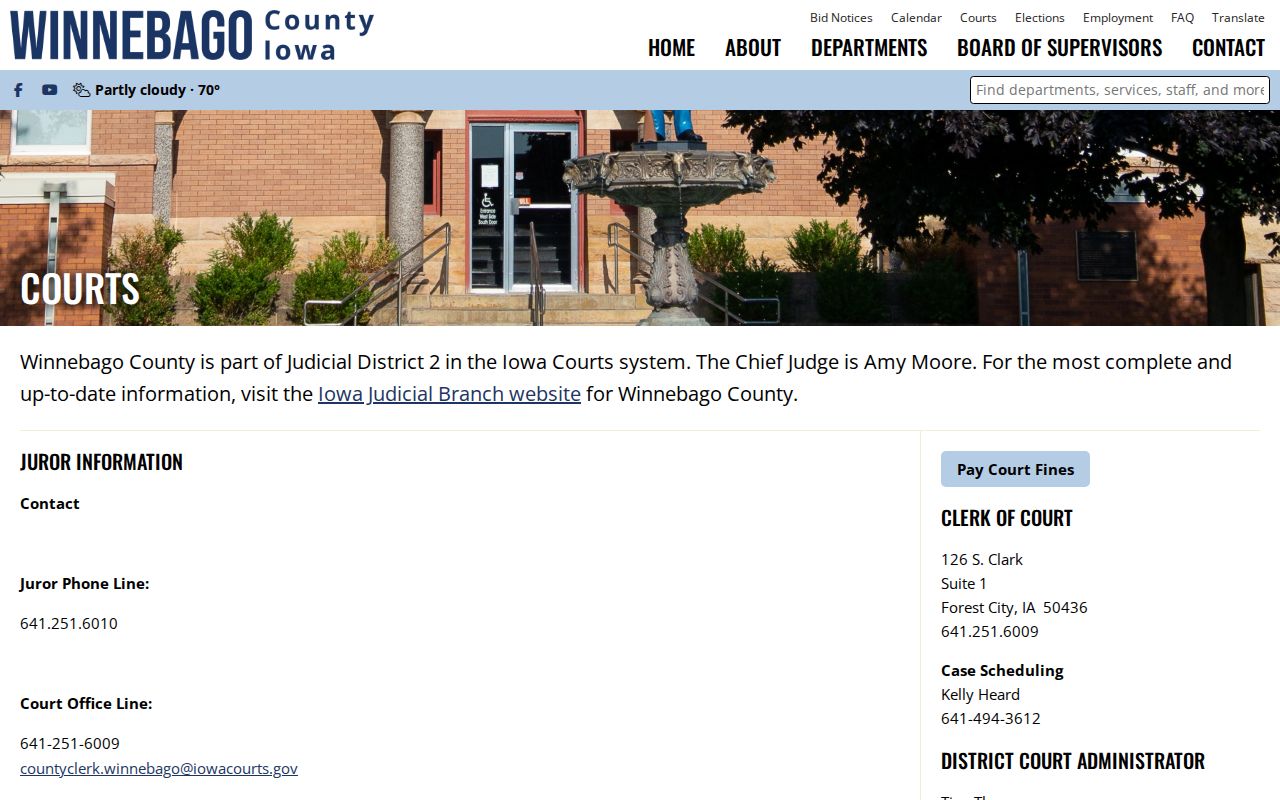
That local office is the key source when a docket summary is not enough to answer what was filed or ordered.
Winnebago County Case Search Fields
The free Iowa Courts Online Electronic Docket Record Search is the broadest public starting point for Winnebago County criminal court cases. It indexes filings and events entered by clerks across Iowa. A new case ordinarily takes one business day to appear after its first entry, while some citations may take 14 to 21 days. Those timing gaps matter when a very recent arrest has not yet produced a visible complaint.
The official public docket interface shows the controls used to narrow a Winnebago County case search.
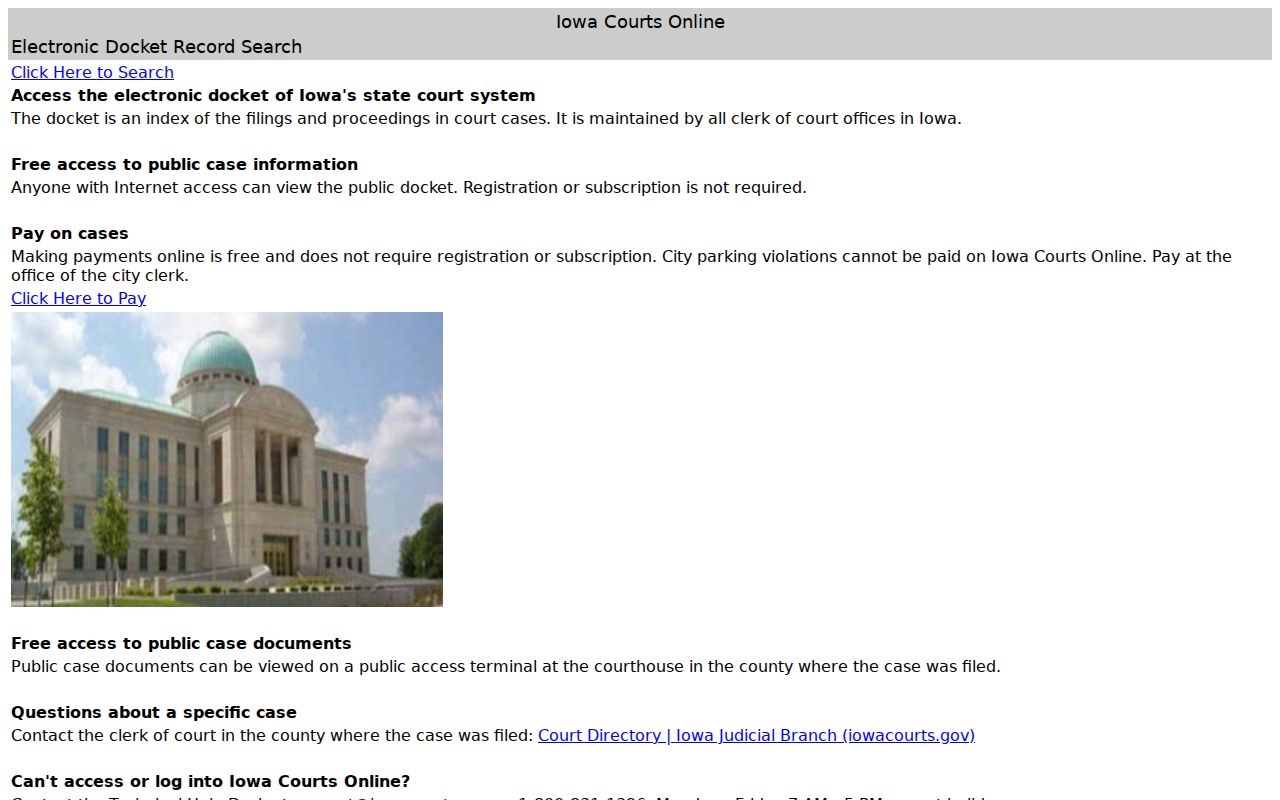
Choosing Winnebago as the county helps separate local cases from same-name parties elsewhere in Iowa.
How to Search Case Records
Use a case number when it is known. It is more exact than a name. A name search works well when paired with the county and the correct case type. If the online docket has no result, allow for the initial entry lag, spelling differences, a case older than the electronic coverage, or a confidential file before deciding that no Winnebago County criminal case exists.
- Open the free public docket and choose a name search or a case or citation search.
- Enter at least two characters for both first and last name, or supply the entire case ID or citation number.
- Select Winnebago County and the most relevant criminal case type when those filters are offered.
- Open the result and compare the party, filing date, charges, events, and status before relying on it.
- Ask the Winnebago County Clerk for the actual filing, a certified copy, or help with an older record.
The payment search uses much of the same public index, but it is built to locate amounts due rather than provide a complete criminal case review.
| Field Label | Type | Required | Notes |
|---|---|---|---|
| Search tab | Radio or tab | Yes | Choose name or case/citation number |
| County | Dropdown | Optional in name mode | Select Winnebago |
| First and last name | Text | Paired | At least two characters in each field |
| Partial citation number | Text | Alternative | Use the last four to six digits |
| Case ID or citation | Text | Alternative | Enter the entire identifier |
The official payment search illustrates those name, case, and citation controls.
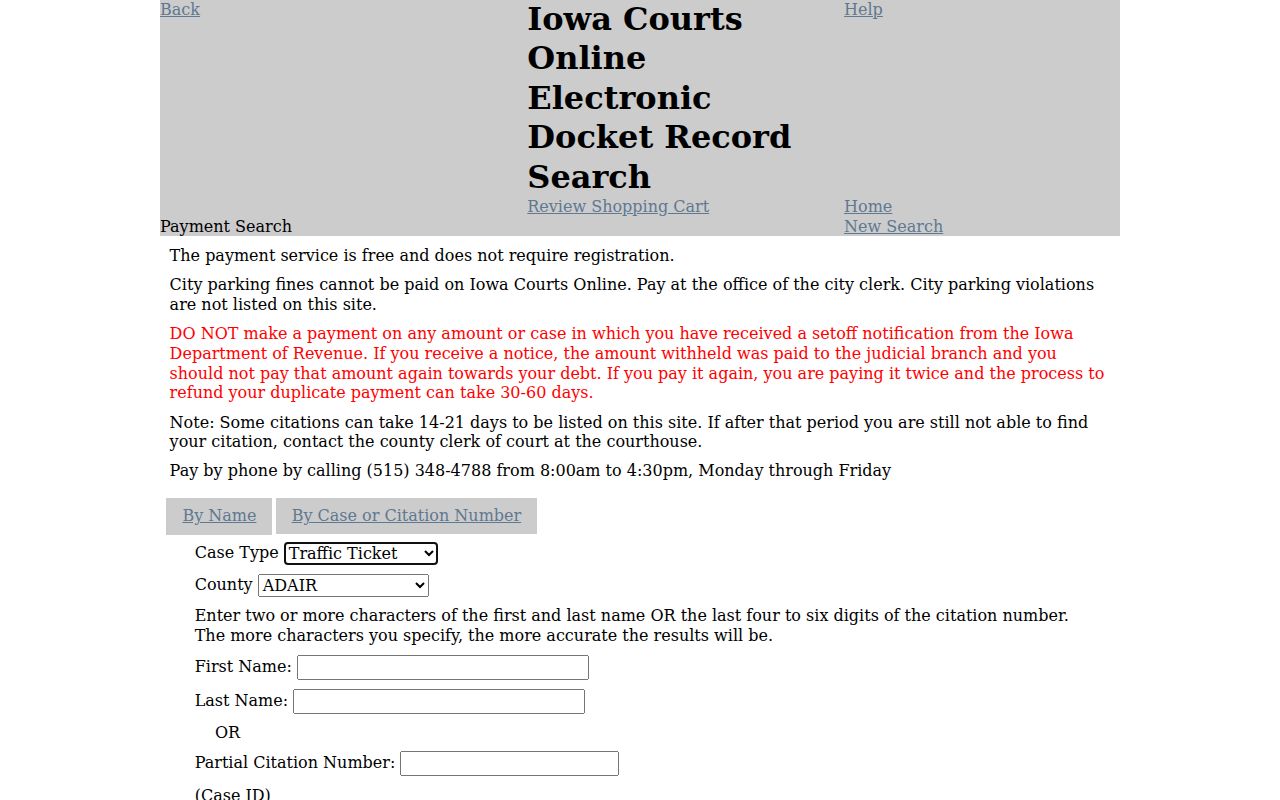
Use its financial result as one part of the docket, not as proof that every filing has been reviewed.
Winnebago County Case Filings
Online entries are not the same as the filed papers. Public documents can be viewed free at the courthouse public-access terminal. The Winnebago County Clerk of District Court is at 126 S. Clark St., Suite 1, Forest City, IA 50436, and the current office phone is 641-251-6009. The county page also carries an older fines and traffic number, so the current clerk line is the sound first call for case files.
Ask for a complaint, order, judgment, or sentencing document by case number and title when possible. The county page does not publish current copy or certification fees, so confirm the charge and format before ordering. For electronic records that predate 1998 or were never scanned, the clerk can explain whether an index, paper file, or archive search is available. Court closure dates can differ from ordinary county office holidays.
Note: Advanced docket access does not replace the free courthouse terminal for public documents filed in a Winnebago County case.
What the Case File Shows
A Winnebago County criminal case file follows the court’s work, not just the arrest. It begins with a complaint or other charging paper and grows as appearances, motions, pleas, orders, and hearings are entered. The docket can also show the charge statute and class, scheduled court events, bond data, financial obligations, and the final disposition. Each field answers a different question, so a pending charge should never be read as a guilty judgment.
| Case Number & Court | Identifies the Winnebago County file, case type, filing date, and court. |
|---|---|
| Charging Document | States the allegation filed with the clerk; it is not a finding of guilt. |
| Docket Entries | Lists appearances, motions, pleas, orders, and other recorded events. |
| Hearing Dates | Shows scheduled events, location, and judicial officer when entered. |
| Disposition & Judgment | Explains how each charge ended, including conviction, dismissal, or acquittal. |
| Sentence & Conditions | Records the court’s sentence, costs, restitution, and related orders. |
Protected identifiers are redacted. Sealed, expunged, and most juvenile records are not ordinary public docket material. A blank field can also mean the clerk has not yet entered that event.
Winnebago County Advanced Court Access
Iowa Courts Online Advanced Case Search costs $25 per month. It adds search and display detail for parties, judgments and liens, exhibits, service returns, financial data, case types, traffic matters, and schedules. It does not include document images. That limit often trips up a reader who expects a paid account to supply the complaint or sentencing order.
The official Advanced Search registration page sets out the subscription access.
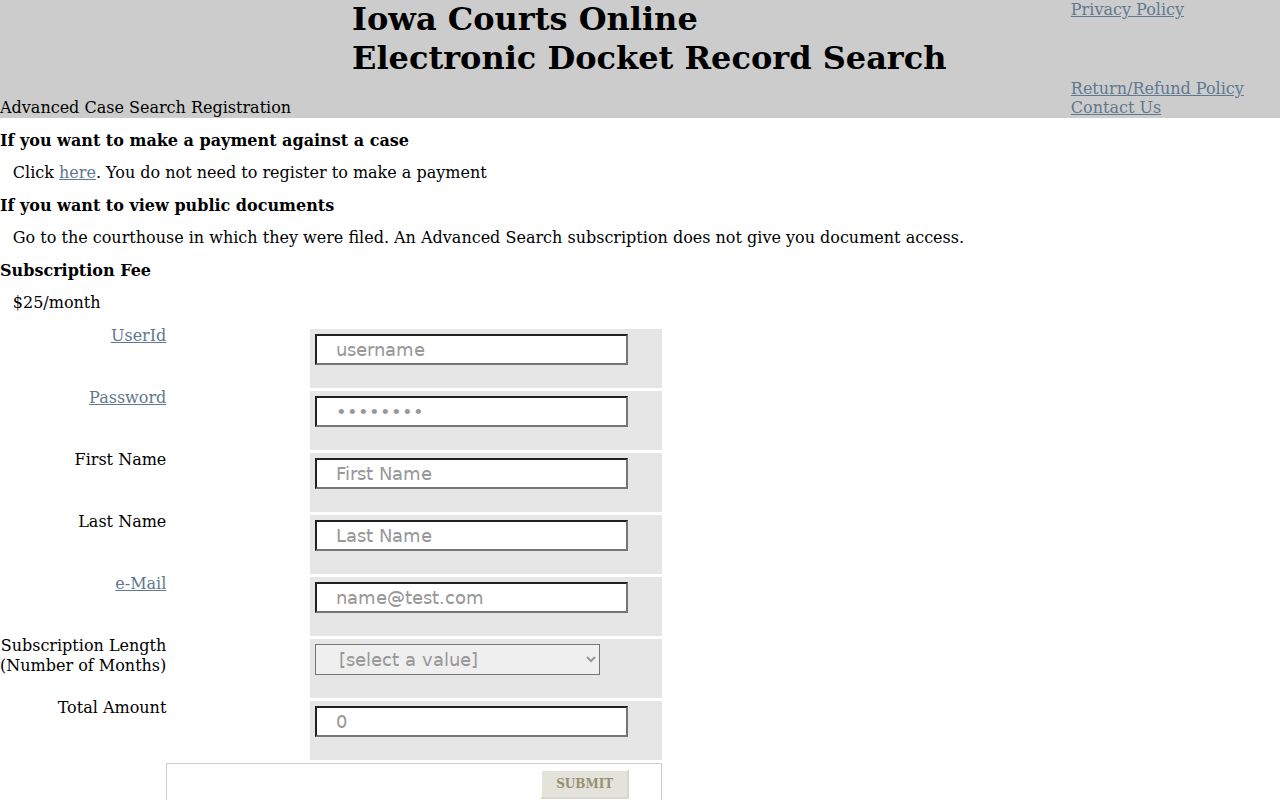
For a small number of Winnebago County files, free public search plus courthouse terminal access may provide the more direct route.
Stages of a Criminal Case
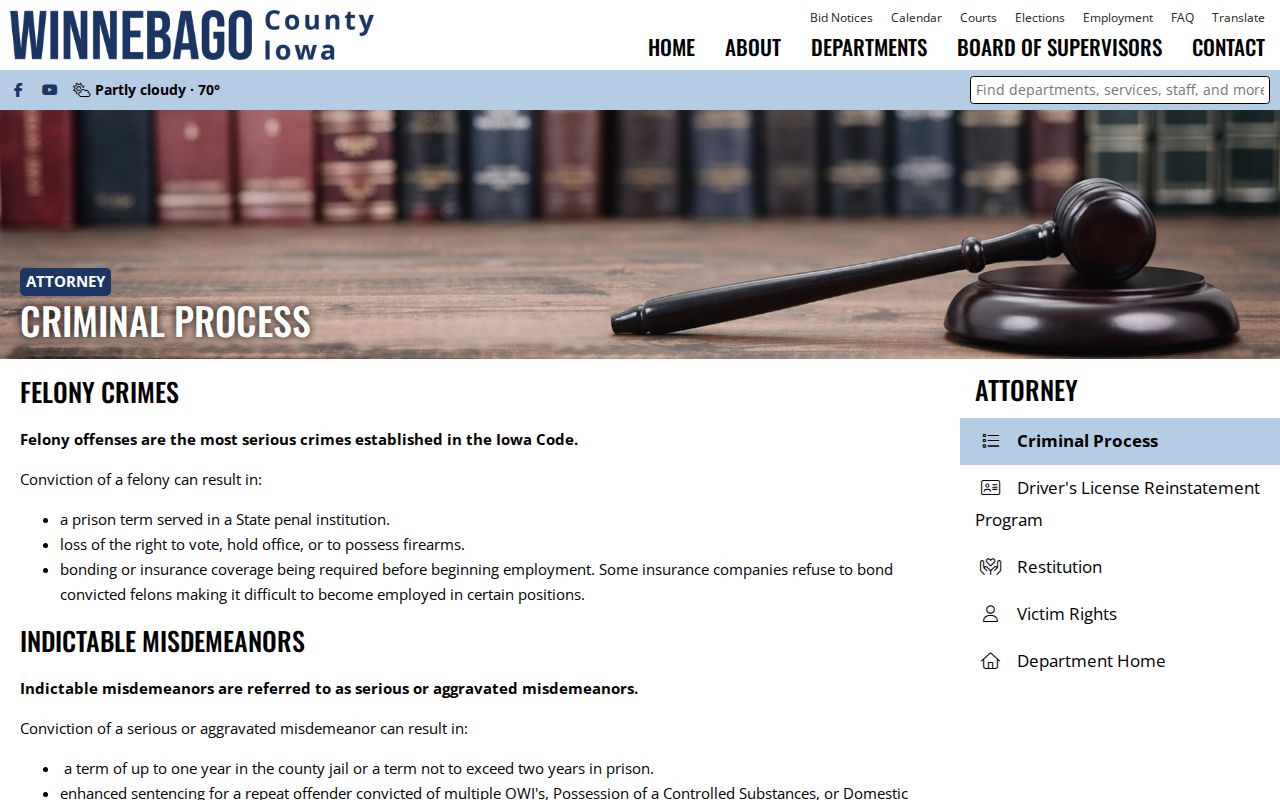
The Winnebago County Attorney describes a local case as a chain that begins with an agency report and investigation. If an officer believes the evidence supports a crime, the officer selects a charge, at times after consulting a supervisor or the county attorney, and files a complaint with the clerk. The case then reaches an initial appearance, release decision, formal charging work, plea or trial, judgment, and sentence. An appeal can add a separate layer.
Case flow: Charges Filed › Arraignment › Pretrial › Plea or Trial › Disposition › Sentencing
The county attorney’s criminal-process outline shows how local investigation and complaint filing lead into court.
That sequence helps explain why booking charges and the charges finally resolved in court may not match.
Winnebago County Criminal Case Codes
Case codes make the docket easier to scan. Iowa public search may display AG for an aggravated misdemeanor, FE for a felony, OW for an operating-while-intoxicated case, and SM for a simple misdemeanor. SW identifies a search-warrant case type, though an unexecuted warrant application or order may remain restricted. The code describes the file category. It does not supply the outcome.
- Disposition
- The way a charge ended, such as conviction, dismissal, or acquittal.
- Arraignment
- The formal stage when the charge is presented and a plea is entered.
- Deferred judgment
- An Iowa result in which judgment is held back while stated conditions are completed.
- Restitution
- Court-ordered repayment for qualifying loss, tracked with help from the clerk, prosecutor, and probation system.
Read the charge, status, disposition, sentence, and financial fields separately. The amount-due screen can remain active after the core criminal judgment, while restitution work can create later records beyond the first order.
Winnebago County Court or DCI
A court file and an Iowa DCI record are linked but not interchangeable. The Winnebago County docket tracks filed charges and court events. The DCI history is a statewide, fingerprint-supported arrest-cycle record that receives disposition data from the clerk. It can omit most simple misdemeanors, minor traffic, arrests without fingerprints, and federal or out-of-state cases. A court case can therefore exist even when a DCI response does not show that cycle.
For a specific local outcome, start with the court file. For personal review of fingerprint-supported Iowa history, use the official DCI process. The broader Winnebago County criminal history overview explains how agency, jail, court, and repository records fit together. Match the source to the question before drawing a conclusion.
Access & Restrictions
Iowa Code chapter 22 provides a right to inspect and copy public records, subject to lawful exceptions. Court access is also shaped by rules for confidential case types and protected data. Most juvenile court records are confidential under Iowa Code section 232.147. Expunged matters, sealed files, protected personal identifiers, and some victim-sensitive material do not appear as ordinary public content.
Unexecuted arrest and search warrant applications can stay restricted until execution, return, or initial appearance. Investigative filings may remain closed before charges. Absence from the public docket therefore does not prove that no warrant or proceeding exists. Confirm a known case with the Winnebago County Clerk, and ask the custodian to identify the legal basis if access is denied.
Note: A filed allegation remains an accusation unless the Winnebago County court record shows a plea or finding of guilt.